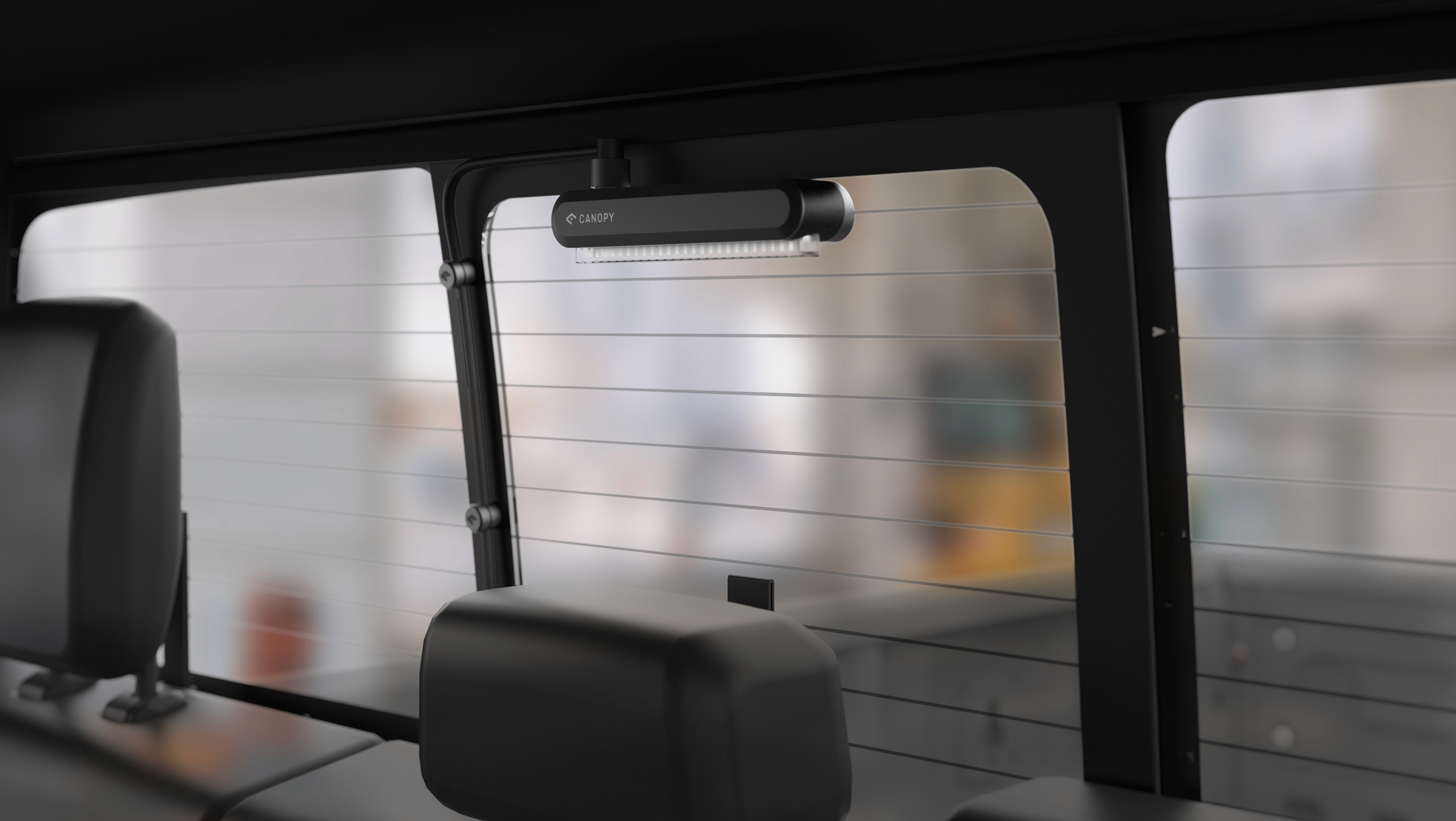
Canopy security device mounted in a Ford F150
Rethinking vehicle security for commercial mobility with AI

Gabriel Mitchell

Ford Motor Company
2020
–
2023
Helping Ford ship their first piece of consumer hardware powered by AI.
Training Systems for Uncontrolled Environments

Reliable detection required understanding how vehicle break-ins actually occur—and how they differ from normal environmental activity. We led a large-scale data collection effort, working with specialists to simulate real-world intrusions across trucks and vans in varied conditions.
Thousands of audio and motion samples were captured, annotated, and tested to establish detection thresholds that minimized false positives. These insights informed sensor selection and model design, resulting in a custom threat detection architecture built for real-world variability.
As vehicle theft increasingly affects commercial truck and van owners, Ford began exploring how real-time intelligence could move security from passive alerts to proactive threat detection. The effort marked Ford’s first consumer-facing hardware product powered by embedded AI.
New Material partnered with Ford over a multi-year engagement to define, design, and bring this system to production. The resulting platform introduced real-time threat detection using custom sensor-fusion AI. By combining audio and motion signals, the system identifies signs of a break-in before damage occurs, operating continuously at the edge under strict power constraints.
Building Intelligence for the Edge

A spectrogram of an ambulance siren
Bringing this intelligence into production required translating models into embedded systems capable of continuous operation under strict power constraints. Our team worked closely with Ford and AI chip manufacturers to optimize models for low-power, always-on execution, tailoring inference pipelines, memory usage, and system behavior to meet the realities of edge deployment while maintaining detection performance and reliability.
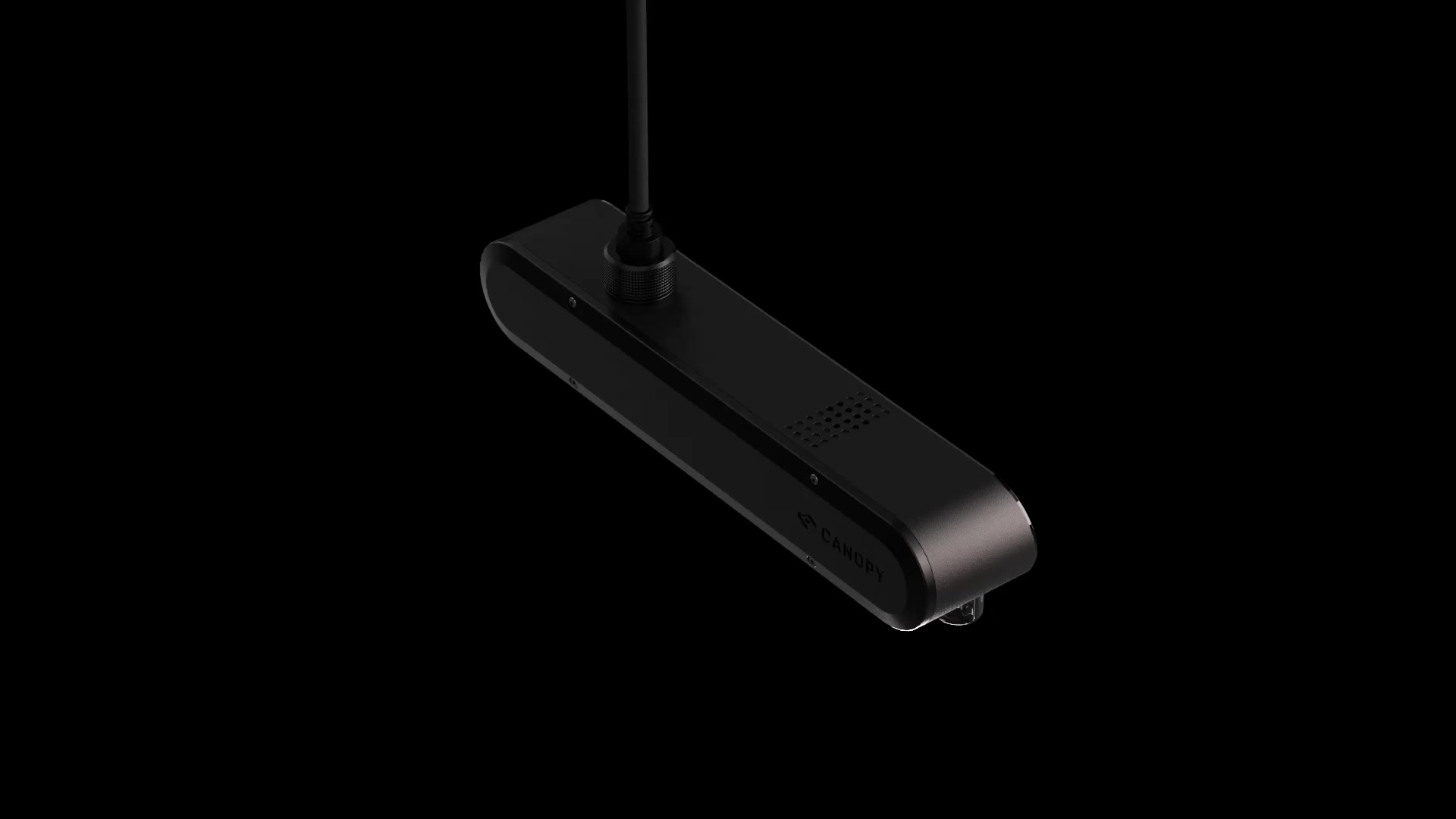
Exploded view of the Canopy industrial design.

Canopy Packaging System
Shaping the Product Experience
In parallel, we collaborated with Ford’s product and manufacturing teams to design the physical system. The enclosure was developed to securely house components, adapt across trucks and vans, and convey durability and intelligence through its visual language.
We designed the sensor and battery units for optimal placement and installation, along with packaging and instructions that enabled first-time customers to mount and set up the system with minimal support. Our industrial design team remained involved through manufacturing to ensure design intent was preserved into production.

New Material in your inbox.
Human stories on AI, straight from our studio.
Thank you!
You are now a subscriber.

